Press Release – Update on the removal for restoration of the Kilkivan Grave Slabs:
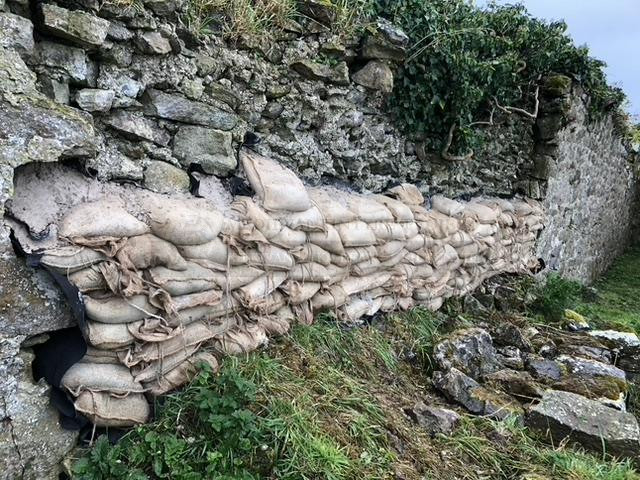
In the same week that Notre Dame has been reopened after extensive restoration work to repair fire damage, the first emergency stage in the restoration of Kintyre’s ancient monuments at Kilkivan, Killean and Kilchenzie has been completed.
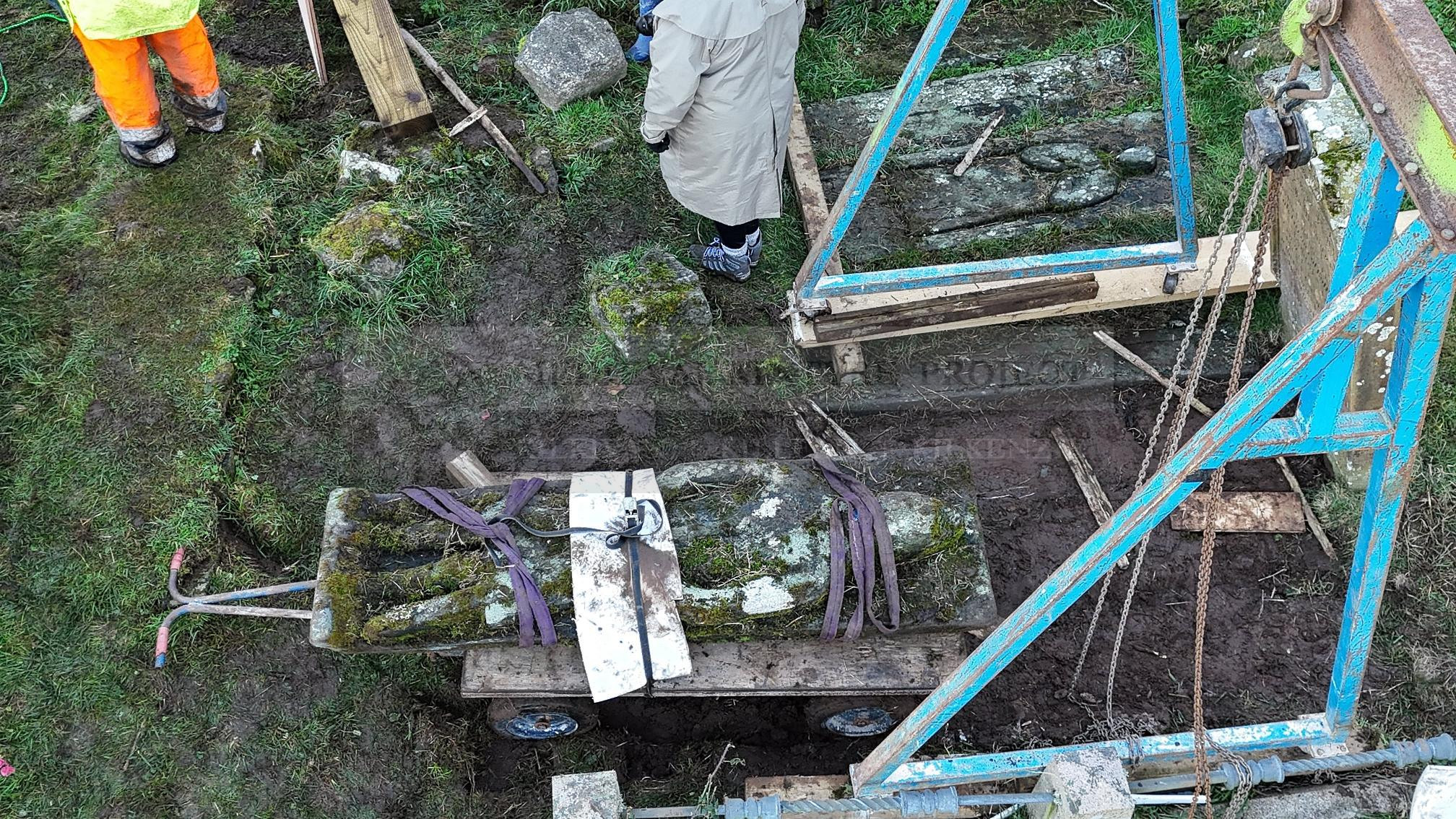
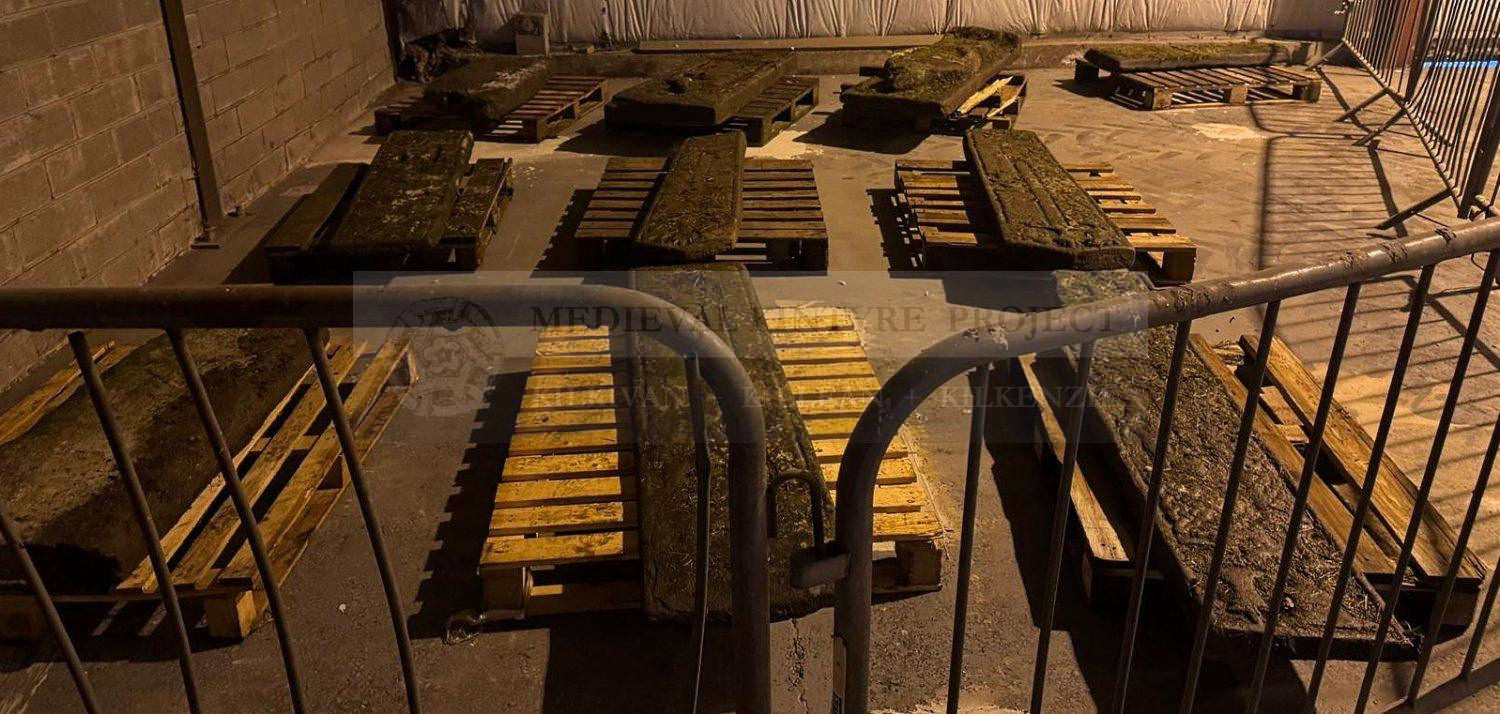
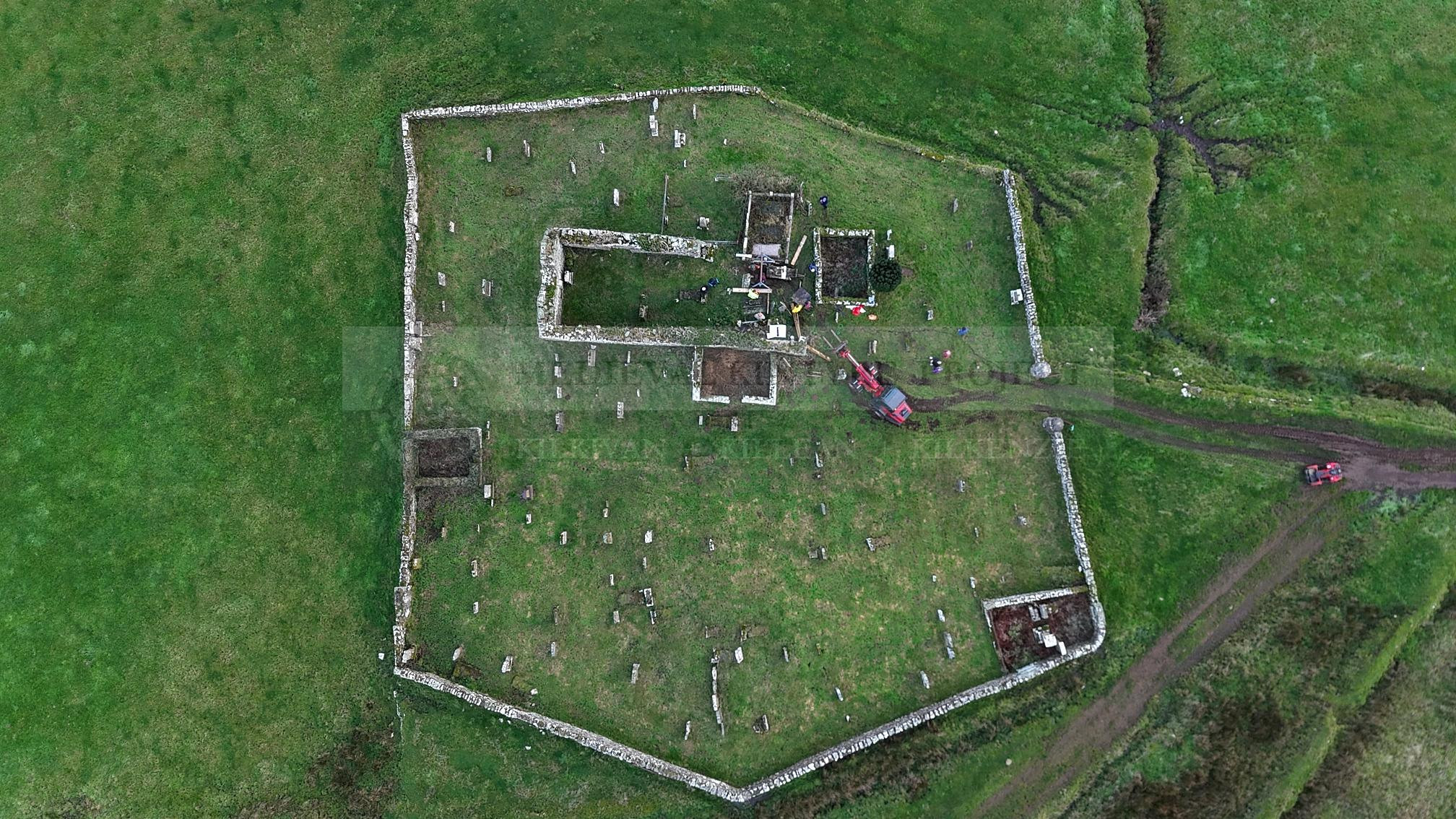
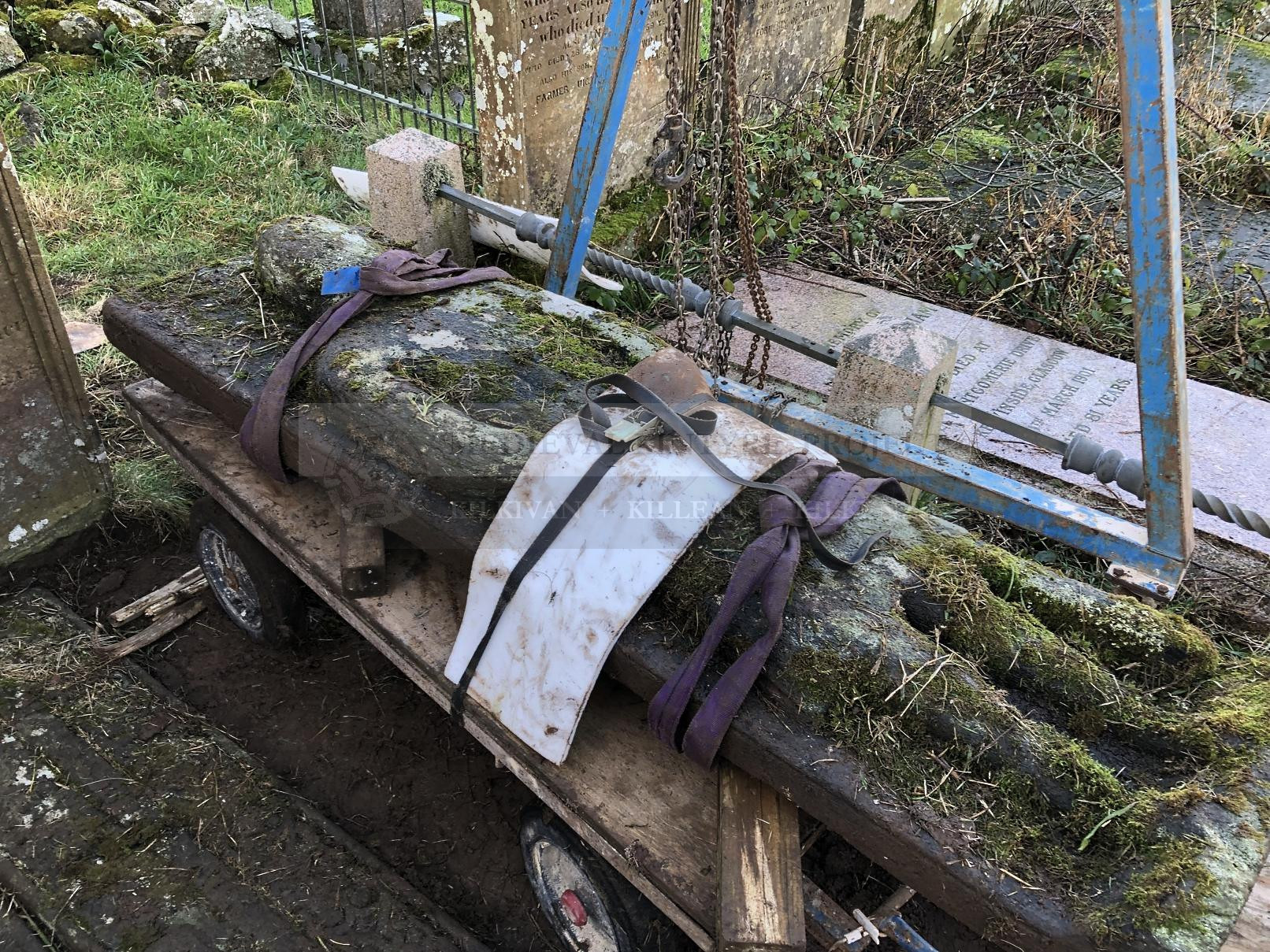
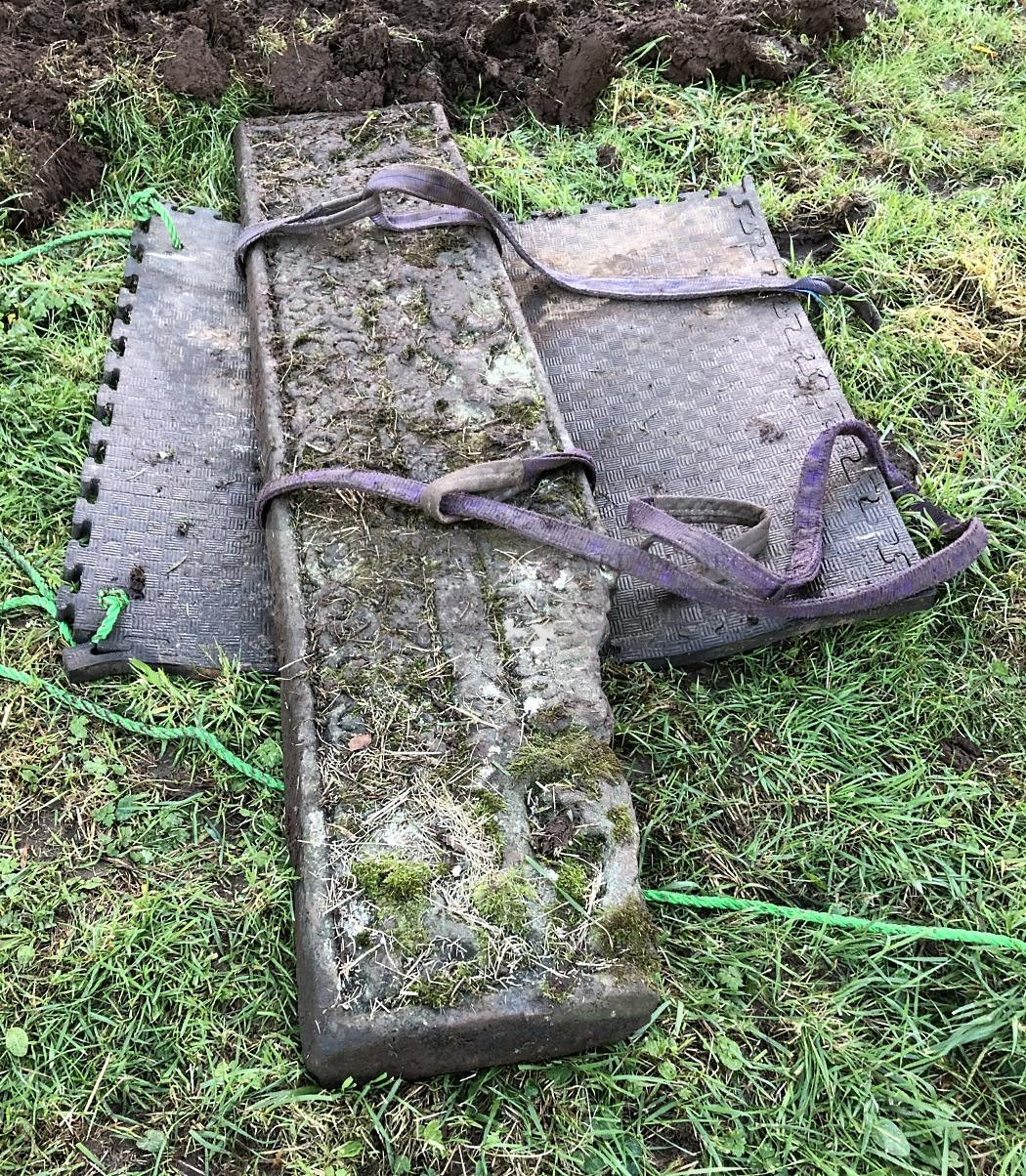
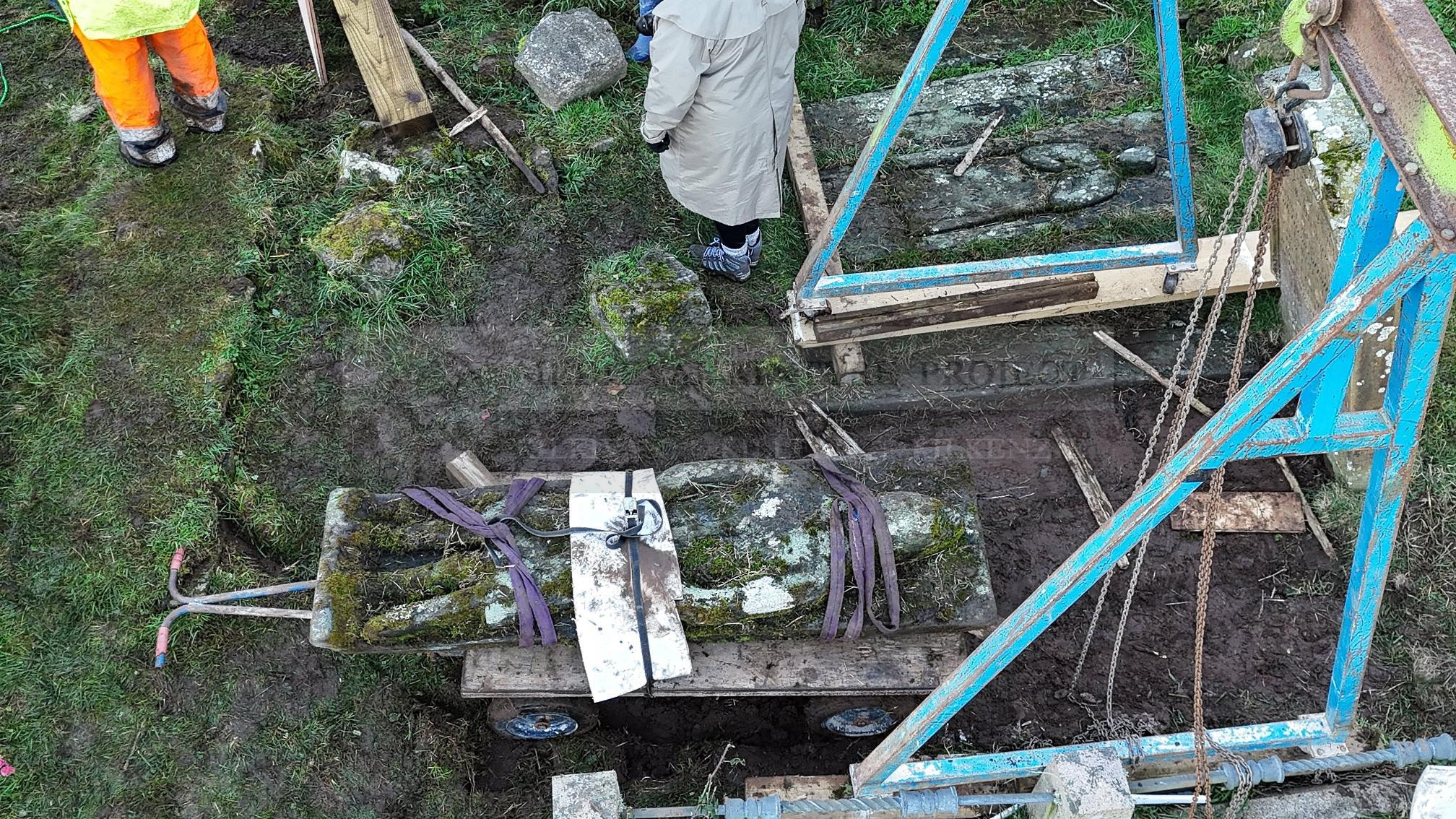
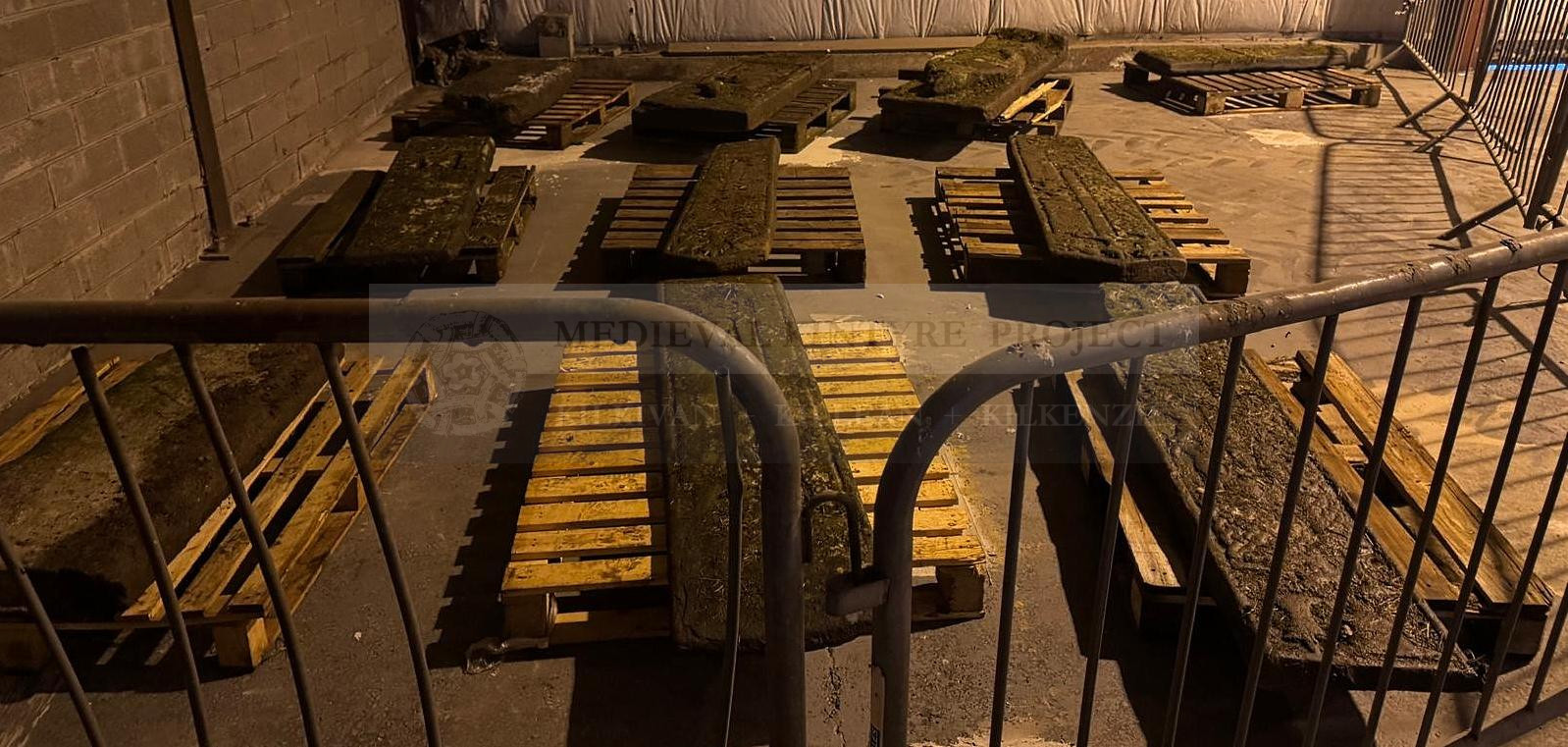
The West Highland Grave Slabs at Kilkivan have been lifted and taken to safety, to the workshop of the stone conservator, Nic Boyes in Edinburgh. The poor weather and the weight of the stones did not make the job easy. In fact, when it became impossible to move the large stone by mechanical means, it took eight very strong men to move the largest slab, the knight*, to the trailer.
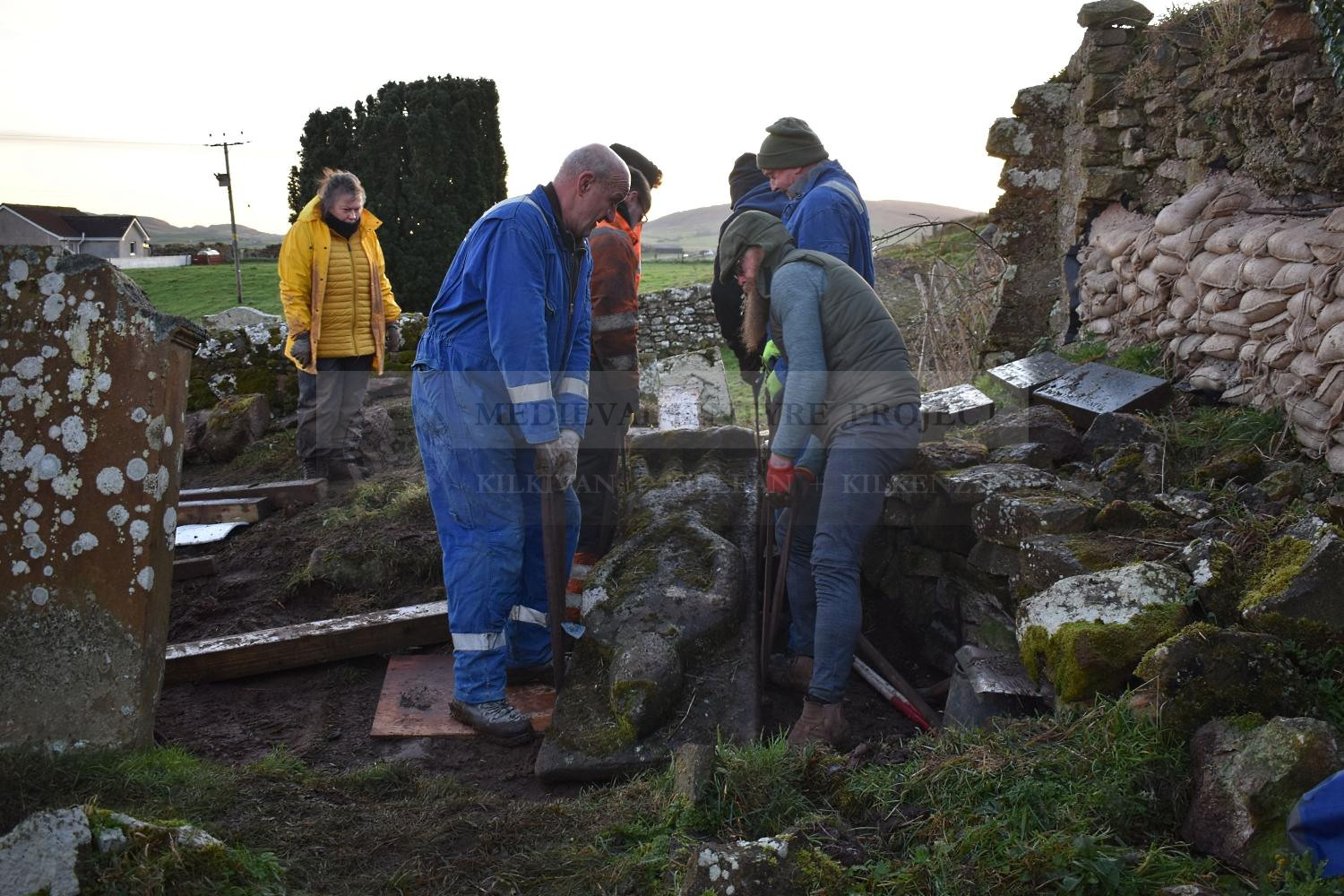
Krystyna Pytasz, our project manager and conservator, states that the knight might have remnants of polychromic decoration** and if this is the case, it would be much more valuable than the majority of the stones on Iona.
Now we move on to the second stage, the complete restoration of these three 11th century churches.
Many of us drive or walk past these buildings, thinking that they are just ruins, but, in fact, they are of national importance, as important to Kintyre, as Notre Dame is to Paris.
For immediate Release – 11th December 2024.
The Slabs are all now safely stored in the Conservator’s Workshop.
For Minutes of our regular project meetings please click HERE
* This last stone covers the remains of Archibald MacNeal, the great duellist. He taught the art of fencing in Kintyre. He is one of the MacNeals of Tirfergus, and many stories are told of his bravery, strength and skill in fighting duels at home and on the continent.
** Medieval grave slabs with polychromic decoration are a distinctive feature of European burial practices during the 12th to 14th centuries. These slabs, typically made of stone, such as Purbeck marble, feature intricate carvings and ornate designs in multiple colours, showcasing the artistic skills of medieval craftsmen.